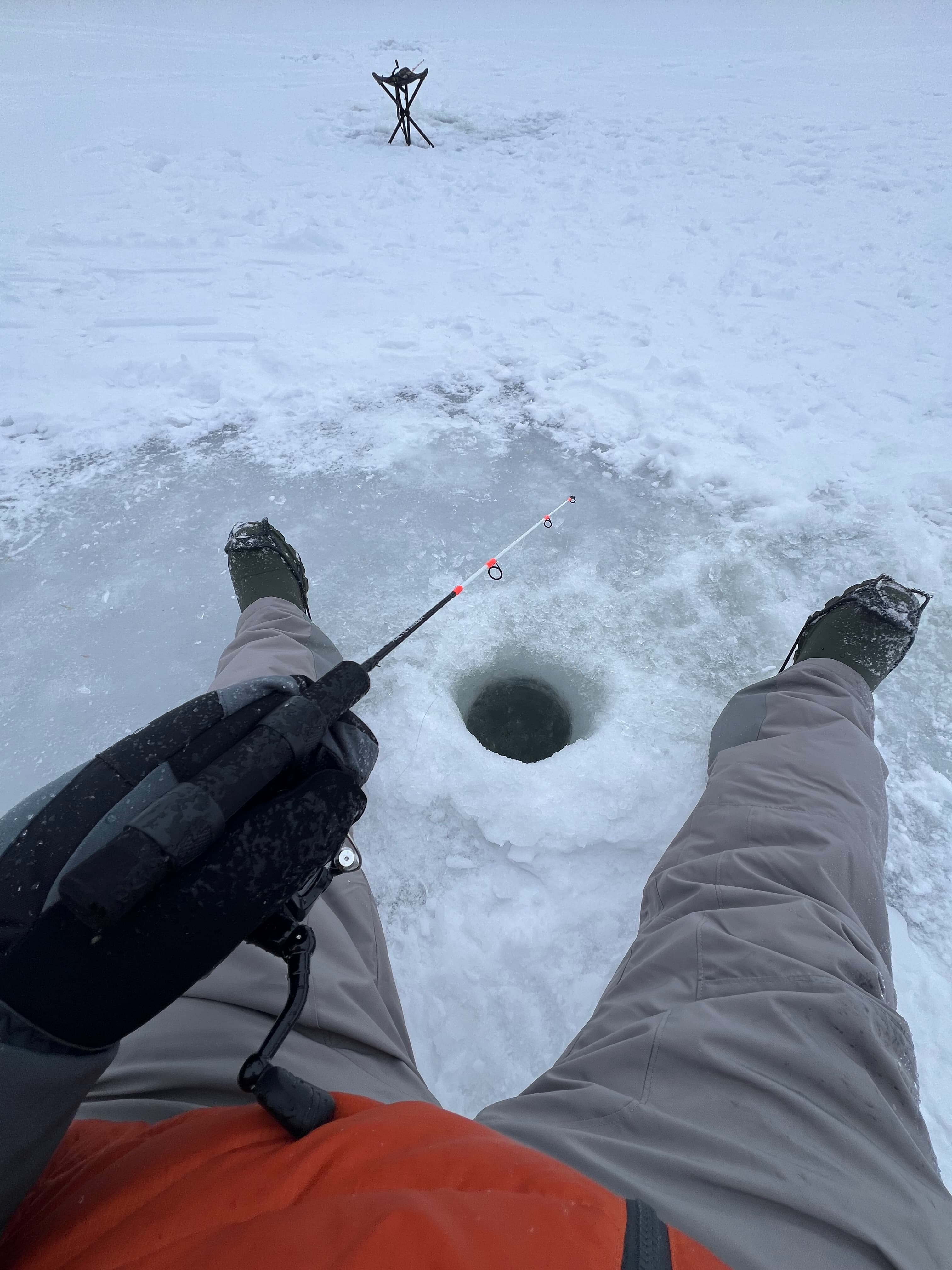
If you enjoy the quiet of winter mornings and the thrill of angling, ice fishing might just become your favorite way to spend the coldest months of the year. There's something uniquely rewarding about drilling through frozen water, dropping a line into the unknown, and feeling that unmistakable tug from below.
Ice fishing isn't reserved for the seasoned veteran with decades of experience—it's accessible to anyone willing to learn. Whether you're a complete beginner wondering where to start or an experienced open-water angler looking to extend your season, this guide will walk you through everything you need to know to fish safely, effectively, and successfully through the ice.
We'll cover the critical safety considerations that should guide every trip, the essential gear that makes the difference between a productive day and a frustrating one, proven techniques for the most popular species, and how modern tools like IceLens can help you plan smarter and fish with confidence.
Understanding Ice Safety: The Foundation of Every Trip
Before we discuss tactics, techniques, or gear, we need to address the most important aspect of ice fishing: safety. The hard truth is that ice fishing carries inherent risks that open-water fishing simply doesn't. Every year, anglers fall through ice that looked safe but wasn't. Understanding ice safety isn't optional—it's the foundation that makes everything else possible.
How Ice Forms and Why It Matters
Ice doesn't form uniformly across a lake. It starts at the shoreline and extends outward, with thickness varying based on water depth, current, springs, and exposure to wind and sun. A lake might have eight inches of solid ice in one bay and dangerously thin ice just a hundred yards away near a spring or inlet.
The type of ice matters as much as its thickness. Clear ice (sometimes called black ice because you can see through it to the dark water below) is the strongest and most reliable. It forms during sustained cold with minimal snow cover. White ice or snow ice forms when water saturates snow on top of existing ice and refreezes—it's roughly half as strong as clear ice. Slush ice is the weakest and most dangerous, forming when snow insulates the ice surface and prevents proper freezing.
Temperature history matters enormously. A week of consistent sub-zero temperatures builds strong, predictable ice. A few warm days followed by a quick refreeze creates layered, unpredictable ice that can look thick on top but have weak spots underneath.
Minimum Ice Thickness Guidelines
These guidelines assume clear, solid ice. Reduce your confidence significantly if ice is white, layered, or of unknown composition:
- 4 inches of clear ice: Safe for walking and ice fishing on foot
- 5 inches: Safe for snowmobiles and ATVs
- 8-12 inches: Safe for cars and small trucks
- 12-15 inches: Safe for medium trucks
But here's the critical point: these are guidelines, not guarantees. Local conditions, recent weather, underwater springs, inlet and outlet areas, and a dozen other factors can create thin spots in otherwise safe ice. Never trust ice blindly based on thickness alone.
How IceLens Helps You Make Informed Decisions
This is exactly the problem we built IceLens to solve. Traditional ice fishing meant either trusting local reports (which might be days old), drilling test holes across a lake (time-consuming and still risky), or simply guessing based on air temperature.
IceLens uses the modified Stefan equation—the same physics-based model used by scientists and ice researchers—to estimate ice thickness based on accumulated Freezing Degree Days (FDD). But we don't stop there. The system factors in:
- Historical weather data: Not just today's temperature, but the entire freeze history of the season
- Snow depth and insulation: Snow acts as an insulator, slowing ice growth significantly
- Wind exposure: Wind clears snow and affects ice formation rates
- Lake characteristics: Depth, surface area, inlets, outlets, and whether the lake is spring-fed all affect how ice forms
- Ice quality detection: Our algorithms estimate whether you're dealing with clear ice, white ice, or mixed conditions based on freeze-thaw patterns
The result is a safety rating for specific activities—so you know whether conditions are suitable for walking, snowmobiling, or driving, not just a raw thickness number. You'll also see confidence scores that tell you how reliable the estimate is, and warnings about conditions that increase risk, like recent warming trends or known problem areas.
Try IceLens before your next trip →
For a complete deep-dive into ice safety principles, self-rescue techniques, and emergency preparedness, read our Ice Safety Basics Guide.
Essential Gear for Ice Fishing Success
Ice fishing requires specialized equipment that differs significantly from open-water angling. The good news is that getting started doesn't require a massive investment—you can begin with basic gear and upgrade as you discover what matters most for your style of fishing.
Cutting Through: Ice Augers
You can't fish through ice without a hole, and the tool you use to make that hole significantly impacts your fishing experience.
Hand augers are affordable, quiet, lightweight, and require no fuel or batteries. They're perfect for anglers who fish moderate ice (under 12 inches) and don't need to drill many holes. The workout is real, but many anglers appreciate the simplicity and reliability.
Power augers come in gas, electric, and propane varieties. Gas augers cut through thick ice quickly but are heavier, louder, and require more maintenance. Electric augers have improved dramatically—modern lithium-ion models can drill 50+ holes on a single charge, run quietly, and start instantly in any temperature. Propane augers offer a middle ground: cleaner than gas, more powerful than electric, but require fuel canisters.
For most anglers, an 8-inch auger diameter offers the best balance between hole size (big enough for most fish, small enough for ice removal) and cutting effort.
Rods, Reels, and Rigging
Ice fishing rods are shorter than their open-water counterparts—typically 24 to 36 inches—because you're fishing directly below you rather than casting. This shorter length provides better sensitivity and control in tight spaces.
Match your rod to your target species:
- Ultralight rods (light action, 2-4lb line) for panfish like bluegill, perch, and crappie. Sensitivity is critical for detecting subtle bites.
- Medium rods (medium action, 6-10lb line) for walleye. You need enough backbone to set hooks but enough feel to detect light takes.
- Medium-heavy to heavy rods (10-20lb+ line) for pike and lake trout. These fish require more stopping power and can't be horsed through a small hole.
Spinning reels designed for ice fishing feature larger handles and components that work better with cold, gloved hands. Look for smooth drag systems—you'll need them when a big fish makes a run under the ice.
Shelter: Your Base of Operations
Ice fishing shelter isn't just about comfort—it's about extending your time on the ice and protecting yourself from conditions that can become dangerous.
Flip-over shelters combine a sled with a fold-out enclosure. They're highly mobile, set up in seconds, and work well for anglers who move frequently. The trade-off is limited space—most flip-overs accommodate one or two anglers.
Hub-style shelters are larger pop-up structures that can accommodate four or more anglers with room to spare. They offer more protection from the elements and space for heaters, electronics, and gear. The downside is that they're heavier, slower to set up, and less practical for mobile fishing.
Permanent ice houses are the ultimate in comfort—insulated structures transported onto the ice for the season. They offer heat, furniture, and protection from even extreme conditions. They're also the least mobile and most expensive option.
Electronics: Seeing What You Can't See
A quality flasher or fish finder is the single most impactful upgrade most ice anglers can make. Unlike open-water fishing where you're covering area, ice fishing is vertical—you're targeting a small column of water directly below your hole. Knowing what's in that column changes everything.
Modern flashers show you depth, bottom composition, your lure, and crucially—fish. You can watch fish approach your bait, see how they react to your jigging motion, and adjust in real time. When a fish is looking but not biting, you can try different presentations until something triggers a strike.
Forward-facing sonar and underwater cameras take this further, showing you exactly what's happening below the ice. These are premium investments, but for serious anglers, the advantage is significant.
For complete gear recommendations organized by budget and experience level, read our Essential Ice Fishing Gear Guide.
Targeting Popular Ice Fishing Species
Different species require different approaches—different locations, different presentations, different times of day. Understanding these differences is what separates consistent success from hit-or-miss fishing.
Bluegill: The Perfect Starting Point
Bluegill are abundant in most lakes, aggressive feeders, and relatively predictable in their winter behavior. They school in groups, so when you find one, you've often found a hundred. This makes them ideal for beginners learning to read ice fishing electronics and develop technique.
Where to find them: Bluegill relate to structure and vegetation. Look for them around weed edges in 8-15 feet of water, especially areas where healthy green weeds survived into winter. Drop-offs near shallow bays concentrate fish. In early ice, they'll be shallower; as winter progresses, they move deeper.
How to catch them: Small jigs (1/64 to 1/32 oz) in bright colors tipped with wax worms, spikes, or soft plastics are standard. The key is subtlety—bluegill respond to small movements, not aggressive jigging. A slight quiver or slow lift-and-drop often triggers strikes that vigorous action misses.
When to fish: Early morning and late afternoon are prime, but bluegill will feed throughout the day in the right conditions. On sunny days, they often move shallower at midday as sunlight warms the upper water column.
For comprehensive bluegill tactics, including advanced techniques and seasonal patterns, read our Ice Fishing for Bluegill Guide.
Crappie: Suspended Schoolers
Crappie are among the most popular ice fishing targets—they're abundant, they fight well for their size, and they're excellent eating. But they require a different approach than bottom-oriented species.
Where to find them: Unlike bluegill and perch, crappie often suspend in open water over deep basins. They might be holding at 15 feet in 40 feet of water, completely unrelated to bottom structure. This makes electronics essential—without them, you're guessing where in the water column to fish.
How to catch them: Small jigs and plastics work, but crappie have relatively soft mouths, so light line (2-4lb test) and a soft rod tip help prevent pulling hooks. Many anglers prefer small swimming jigs or hair jigs that provide action with minimal movement. Set the hook gently—a hard hookset often tears free.
When to fish: Crappie are famous for their low-light activity. Dawn and dusk are prime time, and nighttime fishing under lights can be exceptional. On overcast days, they may feed more consistently throughout the day.
Master crappie-specific techniques with our Ice Fishing for Crappie Guide.
Walleye: The Crown Jewel
For many ice anglers, walleye are the ultimate target. They're challenging to find, selective about presentations, and outstanding on the table. Catching walleye consistently through the ice requires understanding their behavior and being in the right place at the right time.
Where to find them: Walleye relate to structure—points, humps, saddles between structure elements, and transitions from hard to soft bottom. They're often found in areas with moderate depth (15-30 feet is a common range) where forage species like perch and shiners congregate. Look for areas where contour lines bunch together on a lake map, indicating steeper breaks.
How to catch them: Jigging spoons, jigging raps, and live minnows on tip-ups are all effective. The key is matching aggression to mood—during active feeding windows, aggressive jigging draws strikes. During slower periods, a subtle lift-drop-pause or dead-sticking a minnow might be the only thing that works.
When to fish: Walleye are crepuscular feeders, meaning dawn and dusk are prime time. The hour before and after sunrise and sunset can produce most of your day's action. Night fishing can be excellent, especially around full moons. Midday is typically the slowest period, though overcast conditions can extend feeding windows.
Dive deep into walleye tactics with our Ice Fishing for Walleye Guide.
Northern Pike: Apex Predators Through the Ice
Pike are ambush predators that remain actively feeding through winter. They're exciting to catch, reaching sizes that test your gear and your ice hole. Most pike are caught on tip-ups, making them an excellent secondary target while you jig for other species.
Where to find them: Pike patrol the edges of healthy weed beds, particularly where structure creates ambush points—inside turns, points, and transitions between vegetation types. Unlike summer, when big pike go deep, winter pike often stay relatively shallow (6-15 feet) near remaining green vegetation.
How to catch them: Tip-ups rigged with large, lively minnows (shiners, suckers, or large fatheads) are the traditional approach. Set tip-ups at different depths to pattern where fish are holding. When a flag pops, let the fish run and take line before setting the hook—pike often grab prey crosswise and need time to turn it headfirst for swallowing.
Special considerations: Pike have teeth. Wire or heavy fluorocarbon leaders are necessary. You'll also need tools to handle them safely—long-nose pliers, jaw spreaders, and a plan for managing fish that may be too large for your ice hole.
Learn pike-specific tactics and rigging in our Ice Fishing for Northern Pike Guide.
Yellow Perch: The Reliable Schoolers
Perch are the workhorses of ice fishing—they're found in most fisheries, they school heavily, and when you find them, limits come quickly. They're also excellent eating, which keeps many anglers targeting them all winter.
Where to find them: Perch roam. Unlike species that hold tight to specific structure, perch schools move across flats, along basin edges, and through transition zones. Finding them often means drilling lots of holes and staying mobile until you intercept a school. Once found, they may stay in an area for hours—or move off in minutes.
How to catch them: Small spoons and jigs tipped with minnow heads, perch eyes, or spikes are standard. Perch respond well to noise and flash—rattling spoons and flutter presentations often draw them in. Don't be afraid to fish aggressively to call fish to your hole, then slow down once they're there.
For complete perch strategies, read our Ice Fishing for Perch Guide.
Lake Trout: Deep Water Challenge
Lake trout inhabit deep, cold water—often 60 to 100+ feet. They're a specialized target requiring specific gear and techniques, but for anglers seeking a challenge, lakers provide exceptional sport through the ice.
Where to find them: Lakers cruise main lake basins, following baitfish schools and relating to deep structure—underwater points, humps, and breaks. Mapping your lake's deepest areas and understanding where bait concentrates is essential.
How to catch them: Heavy jigs and tube baits in the 1-2 oz range are common, designed to reach and stay in the strike zone at depth. Jigging motion should be aggressive—lake trout respond to flash and vibration that mimics fleeing or injured baitfish.
Take on the deep water challenge with our Ice Fishing for Lake Trout Guide.
Understanding Seasonal Patterns
Ice fishing conditions change dramatically through the winter season. Understanding these patterns helps you adjust your approach and maintain success from first ice through last ice.
First Ice: The Golden Window
The period of first safe ice—typically 4-6 inches—is often the most productive ice fishing of the year. Fish haven't been pressured, they're still in relatively predictable fall patterns, and they feed actively before the deep cold of midwinter arrives.
During first ice, focus on shallower areas where fish lingered in late fall. Weed edges, shallow bays, and nearshore structure often hold fish that haven't yet made their winter migration to deeper water. First ice also tends to be the clearest ice of the season, making it easier to see and assess conditions.
The catch: first ice is also the most dangerous. Ice is thin, conditions change rapidly, and eager anglers sometimes push onto ice that isn't ready. This is where IceLens becomes critical—monitoring ice formation day by day and knowing when conditions finally reach safe thresholds for your planned activity.
Midwinter: The Slow Period
As winter deepens, several factors conspire to make fishing more challenging. Fish metabolism slows in cold water, reducing feeding frequency and intensity. Snow cover accumulates, insulating ice and reducing light penetration that drives aquatic life. Oxygen levels may decline in some lakes, concentrating fish in specific areas while rendering others dead water.
Successful midwinter fishing requires adjustment: slower presentations, smaller baits, more precise locations, and realistic expectations. This is the time to focus on quality spots—areas with remaining green vegetation (indicating better oxygen), deep weed edges, and structure that consistently holds fish.
Late Ice: The Awakening
As days lengthen and temperatures moderate, fish activity increases again. Pre-spawn movements begin, drawing fish toward spawning areas weeks before ice-out. Oxygen levels improve as meltwater enters lakes. Light penetration increases as snow cover retreats.
Late ice can produce fishing nearly as good as first ice—with the important caveat that ice conditions deteriorate rapidly. Ice that was 18 inches thick in February may become unstable in March despite similar thickness measurements. Honeycombing—the internal deterioration of ice structure—makes late ice particularly treacherous.
Again, IceLens helps you navigate this period by tracking not just thickness, but the freeze-thaw cycles and warming trends that indicate deteriorating conditions. Our warning system flags the conditions that signal it's time to stay off the ice, regardless of what thickness measurements suggest.
For detailed seasonal strategies, read our Seasonal Ice Fishing Patterns Guide.
Planning Your Trip with IceLens
We built IceLens because we got tired of the uncertainty that plagued every ice fishing trip. Is the ice safe? How thick is it really? Has it been warming? Is this lake even fishable yet?
Traditional approaches to these questions were unsatisfying: local reports that were days old, driving to the lake to check conditions yourself, or simply rolling the dice based on air temperature. IceLens changes this by giving you science-based estimates before you ever leave home.
What IceLens Tells You
Ice thickness estimates: Based on the modified Stefan equation, calibrated with historical weather data for your specific location. You'll see estimated thickness in inches, plus a range that accounts for uncertainty.
Safety ratings by activity: We don't just give you a number—we tell you whether conditions are suitable for walking, snowmobiling, or driving. Color-coded ratings make it immediately clear whether a trip is advisable.
Ice quality assessment: Our algorithms analyze freeze-thaw history to estimate whether you're dealing with strong clear ice, weaker white ice, or mixed conditions that require additional caution.
Condition warnings: IceLens flags dangerous situations automatically—recent warming trends, freeze-thaw cycles that weaken ice structure, known problem areas like inlets and springs, and conditions that should keep you off the ice entirely.
Lake-specific intelligence: Deep lakes freeze differently than shallow ones. Spring-fed lakes are unpredictable. Lakes with significant inflow and outflow have thin spots. IceLens factors in lake characteristics to refine estimates beyond simple temperature calculations.
Using IceLens in Your Planning
The best way to use IceLens is as part of your pre-trip routine:
- Days before: Check ice estimates for lakes you're considering. Compare conditions across multiple options. Rule out lakes that aren't ready yet.
- Day before: Review the most current estimates and any warnings. Check the forecast for conditions that might change things. Make your final lake selection.
- Day of: Verify nothing has changed. IceLens updates continuously, so you'll see if overnight conditions affected safety ratings.
- On the ice: IceLens estimates are a starting point—always verify with test holes and personal observation. But you'll arrive with confidence rather than uncertainty.
Explore Our Complete Ice Fishing Guide Library
This article covers the fundamentals, but ice fishing mastery requires going deeper. We've built a comprehensive library of ice fishing guides covering every aspect of the sport:
Species Guides:
- Ice Fishing for Bluegill — Complete tactics for the most accessible species
- Ice Fishing for Crappie — Master the suspended schoolers
- Ice Fishing for Walleye — Target the crown jewel of hardwater
- Ice Fishing for Northern Pike — Apex predator tactics
- Ice Fishing for Perch — Find and catch the roaming schools
- Ice Fishing for Lake Trout — Deep water strategies
Safety and Preparation:
- Ice Safety Basics — Essential knowledge for every ice angler
- Essential Ice Fishing Gear — Complete equipment recommendations
- Seasonal Ice Fishing Patterns — Adapt your approach through winter
Each guide is written by experienced ice anglers who've refined these techniques through years on the hardwater. This isn't theory—it's practical advice that produces fish.
Get Started This Winter
Ice fishing offers something no other angling experience can match—the quiet beauty of a frozen lake, the challenge of reading conditions and finding fish, the satisfaction of success in an environment that demands respect and preparation.
The barrier to entry is lower than most people think. Basic gear is affordable. The techniques are learnable. The fish are waiting.
What makes the difference between frustration and success is preparation. Check your conditions with IceLens before every trip. Study the species-specific tactics in our ice fishing guides. Start with accessible targets like bluegill and perch while you develop your skills. Build from there.
Winter doesn't have to mean the end of fishing season. For ice anglers, it's just the beginning of a different kind of adventure.
Tight lines, and safe ice.
— The Bassfinity Team