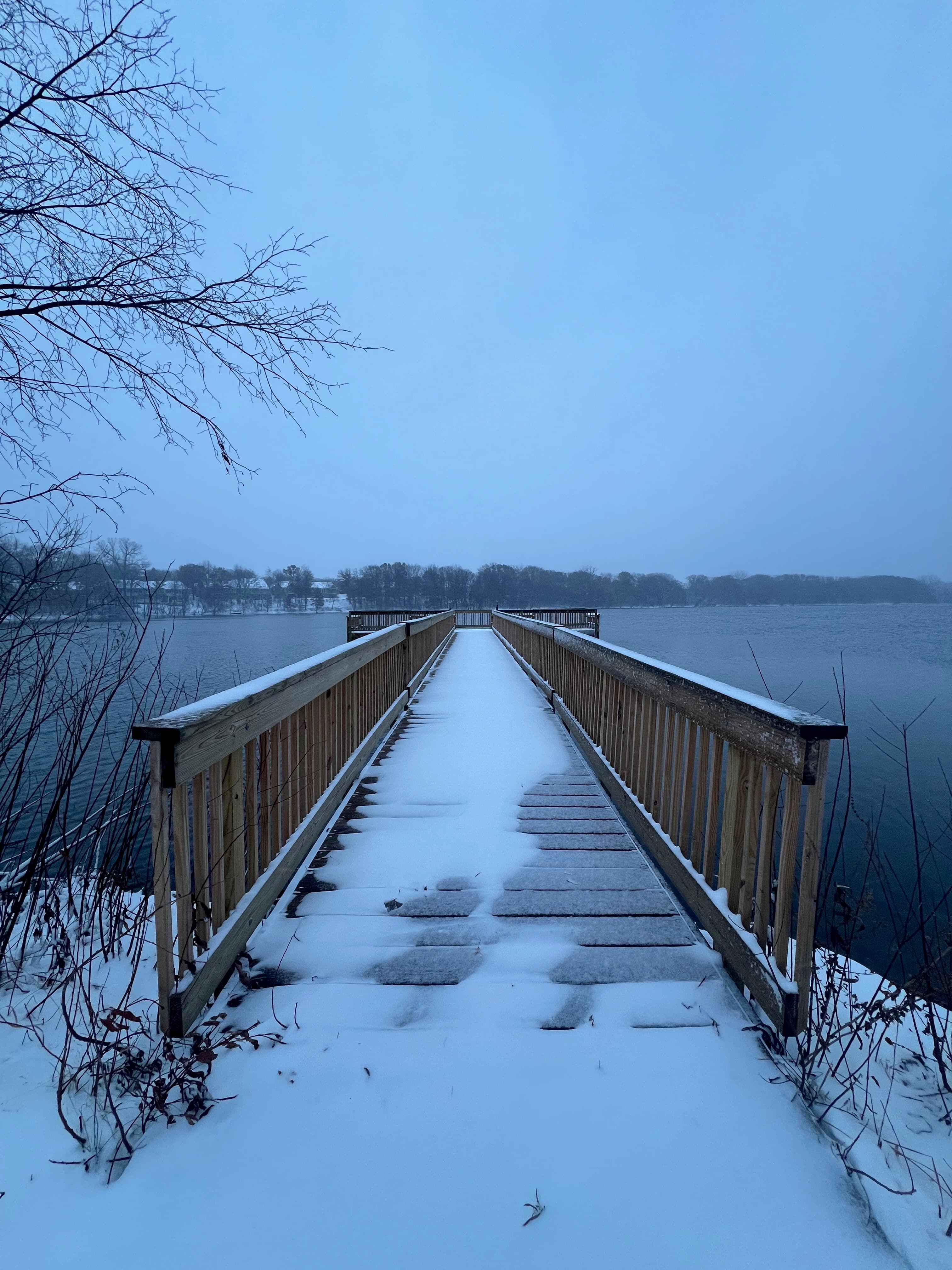
The lake was locked under ice yesterday. Today, open water stretches from shore to shore. And somewhere beneath the surface, every bass in the lake just got the memo: it's time to eat.
Most anglers think of spring bass fishing as something that starts in April or May—when the water warms up, the spawn kicks off, and the usual spots start producing again. But the real window opens weeks earlier, in the chaotic days right after ice-out. And if you're not paying attention, you'll miss the most aggressive feeding period of the entire year.
This isn't folklore. It's physics, biology, and decades of ice-out data pointing to the same conclusion: the 48 to 72 hours after a lake loses its ice creates conditions that bass can't ignore. Understanding why—and being ready—is what separates the angler who catches the fish of a lifetime from the one who shows up two weeks late.
What Actually Happens When a Lake Thaws
To understand why ice-out triggers a feeding frenzy, you need to understand what a lake has been going through all winter.
Under ice cover, a lake stratifies in reverse. The coldest water (just above freezing at 32°F) sits at the surface against the ice, while slightly warmer water (around 39°F, where water is densest) settles to the bottom. Oxygen levels decline steadily, especially in shallower lakes where decomposing vegetation consumes what's available. Light penetration drops to almost nothing once snow covers the ice. The lake is essentially in a coma.
Then the ice goes out—and everything changes at once.
Sunlight floods the water column. For the first time in months, solar radiation penetrates to the bottom in shallow areas. This triggers photosynthesis in surviving vegetation, producing oxygen and warming the water simultaneously.
Wind drives the turnover. Without ice acting as a cap, wind begins mixing the water column. The stratification that held all winter breaks down. Oxygen gets redistributed. Nutrients that settled on the bottom get stirred back into circulation. The lake essentially takes its first deep breath since November.
Water temperature swings dramatically. Shallow bays and dark-bottomed areas can gain 5 to 10 degrees in a single sunny afternoon. These micro-warmzones become the first areas in the lake where water temperatures reach the low 40s—the threshold where bass metabolism starts to accelerate.
Why Bass Respond So Aggressively
Bass are cold-blooded. Their activity level, digestion speed, and feeding motivation are all governed by water temperature. Through the winter, their metabolism has been running at its lowest setting. They've been conserving energy, barely moving, eating only when an easy meal drifts within striking distance.
When ice-out sends water temperatures climbing—even by just a few degrees—bass physiology shifts gears. Their metabolism increases, which means they need calories. And they need them now.
But here's the key: the baitfish haven't caught up yet. Shad, shiners, and minnows are still sluggish, still disoriented by the sudden change in their environment. The predator-prey dynamic tilts hard in favor of the bass. They're hungry. Their food is slow. The result is aggressive, opportunistic feeding that can last anywhere from 48 hours to a full week depending on weather stability.
This is why the window is so productive—and so short. Once the lake stabilizes and baitfish acclimate, bass return to more cautious, selective feeding patterns. The frenzy subsides. You have to wait until the pre-spawn to see that kind of aggression again.
When Does Ice-Out Happen? It's More Predictable Than You Think
Ice-out timing varies enormously by region, latitude, elevation, and lake characteristics. In Minnesota alone—home to over 10,000 lakes—historical data shows ice-out dates ranging from mid-March in the southern counties to mid-May on the Canadian border.
But within a given lake, the timing follows patterns you can learn to read:
Lake size matters. Smaller, shallower lakes lose their ice first. A 50-acre lake surrounded by dark timber might be ice-free two weeks before the 5,000-acre lake down the road. Target the small water first.
Wind exposure accelerates ice-out. Lakes oriented to prevailing winds (typically northwest in the upper Midwest) lose ice faster than sheltered lakes. Wind physically breaks up weakened ice and pushes it to the downwind shore, where it melts against the bank.
Inflows speed things up. Lakes with significant creek or river inflows lose ice earliest around those inflows. Moving water carries heat and erodes ice from below. These inflow areas are also the first places bass move to after ice-out.
Dark bottom absorbs heat. Shallow bays with dark, mucky bottoms absorb solar radiation more efficiently than sandy or rocky areas. These bays often have the first open water on a lake—and the first active bass.
Keeping track of these conditions across multiple lakes used to require obsessive weather monitoring and daily drive-bys. IceLens simplifies this by tracking ice conditions on lakes in your area, alerting you when conditions are deteriorating and ice-out is imminent. Instead of guessing, you'll know which lakes are about to open up—and you can be ready.
Where to Find Bass in the First 48 Hours
Ice-out bass aren't randomly scattered across the lake. They concentrate in specific areas that offer the warmth, oxygen, and food they need. Knowing where to look eliminates the biggest challenge of early spring fishing.
Shallow Dark-Bottom Bays
This is priority number one. Bays with dark, muddy bottoms on the north side of the lake (facing south, catching full sun exposure) warm fastest. Even a half-degree temperature advantage draws bass into these areas. If the bay has any remaining vegetation—cattails, dead reeds, submerged weeds from last fall—it's even better. That vegetation provides cover and attracts the first baitfish and invertebrates to become active.
Creek and River Inflows
Incoming water is almost always warmer than the lake it's entering. This creates a thermal plume that bass follow like a highway. Even a small feeder creek running at 45°F into a 35°F lake creates a zone that's dramatically more attractive to bass than the surrounding water. Work the area where the current meets still water—bass will stage at that seam, ambushing prey that washes in with the flow.
Windblown Shorelines
Wind pushes warmer surface water toward the bank. On a sunny, breezy day right after ice-out, the windward shoreline can be significantly warmer than the lee side. It also collects debris, plankton, and baitfish against the bank—setting the table for bass. Fish the downwind shore, especially if it has shallow cover like docks, fallen trees, or rock.
Riprap and Rock Walls
Rock absorbs and radiates heat. Causeways, bridge pilings, dam faces, and marina riprap all act as heat sinks that warm the adjacent water. Bass know this instinctively. These man-made structures often hold the first catchable bass of the season, and they're easy to find on any lake.
What to Throw—and How to Fish It
Cold-water bass are aggressive after ice-out, but they're not chasing fast-moving baits across the lake. Their metabolism is running, but their muscles are still cold. The key is presentations that are easy to eat—baits that stay in the strike zone, move slowly, and trigger reaction strikes without requiring a long pursuit.
Jerkbaits are the ice-out king. A suspending jerkbait worked with long pauses (5 to 15 seconds between twitches) mimics a dying baitfish—exactly what bass expect to find in post-ice-out conditions. Fish it in 3 to 8 feet of water along the edges of warming bays. When in doubt, slow down. Then slow down more.
Ned rigs and small soft plastics fished on light jigheads (1/8 to 1/4 oz) are deadly in cold water. Drag them slowly across the bottom near creek inflows and rocky areas. The subtle action of a finesse worm or crawfish imitation is often all it takes when bass are in ambush mode.
Blade baits and lipless crankbaits work when bass are slightly more aggressive—typically on the second or third day of stable post-ice-out weather. Lift and drop a blade bait vertically near rocks and drop-offs, or slow-roll a lipless crank through shallow vegetation. The vibration calls fish in from a distance.
Live bait is always a factor in cold water. A lively shiner or fathead minnow on a simple jig fished under a bobber is devastatingly effective and shouldn't be overlooked. Sometimes the simplest approach outperforms everything else.
Not sure what to throw for your specific conditions? TackleLens analyzes your location, target species, and current weather to recommend the exact setup—rod, line, lure, and retrieval technique. Take the guesswork out of tackle selection.
Timing Your Trip for Maximum Success
Even within the ice-out window, timing matters. The best fishing typically occurs:
The afternoon of the first warm, sunny day after ice-out. This is when shallow water temperatures spike the fastest. Bass that have been dormant all winter feel that warmth and move shallow to investigate. If you can only fish one session, make it this one.
During stable weather windows. A string of sunny, 50°F days after ice-out is the dream scenario. Each day compounds the warming effect, and bass get progressively more active. Conversely, a cold front right after ice-out can shut things down temporarily—but the fish don't leave. They just hunker down until conditions improve.
Midday to mid-afternoon. Forget the dawn patrol for now. In early spring, the warmest water temperatures—and the most active bass—occur between 11 AM and 3 PM. The sun has had time to heat the shallows, and bass are positioned to take advantage. As spring progresses and water temperatures stabilize, the bite window will shift back toward morning and evening. But right after ice-out, fish the heat of the day.
Planning your trips around peak conditions is exactly what SolunarBass Pro is built for. The AI Bite Score combines solunar data, weather conditions, and pressure trends for your specific lake—so you know which days this week deserve the drive.
The Lakes Most Anglers Overlook
Here's a tactical advantage most bass anglers ignore: the first lakes to lose their ice are almost always small, shallow, overlooked waters. Farm ponds. City park lakes. Small reservoirs that nobody thinks about once the temperature drops below freezing.
These waters warm fast, they hold bass, and nobody fishes them in February and March. While everyone else is waiting for the big lakes to open up, you could have weeks of productive fishing on waters you can see from the road.
Watch for these small waters to lose their ice first—often two to three weeks before the larger, deeper lakes in your area. They'll give you a head start on the season and plenty of practice before the main event.
Get on the Water First This Spring
The ice-out bite is one of fishing's best-kept secrets—not because people don't know about it, but because so few anglers are willing to pay attention to the timing and show up when it matters. The window is narrow. The weather is unpredictable. The water is cold.
But the fishing can be absolutely electric.
Use IceLens to track ice conditions and know exactly when your lakes are about to open. Use SolunarBass Pro to identify the peak feeding windows once they do. Use TackleLens to dial in the right presentation for cold-water conditions.
And be the angler who's already on the water while everyone else is still scrolling through last year's photos waiting for "spring."
Reader Exclusive: 50% Off Your First Month
Ready to get ahead of the ice-out bite this spring? We're offering readers of this article an exclusive discount.
Use code ICEOUT50 at checkout for 50% off your first month of Bassfinity Pro. Get full access to IceLens ice tracking, SolunarBass AI Bite Scores, TackleLens gear recommendations, and everything else in the Pro toolkit—at half price.
Claim your 50% discount with code ICEOUT50 →
Tight lines, and watch the ice.
— The Bassfinity Team